Knowledge from the Margins
What is Knowledge from the Margins?
Knowledge from the margins is knowledge produced by, or about, people and institutions who have historically been (intentionally or unintentionally) excluded from innovation and knowledge production. These groups include women, indigenous people, persons with disabilities, the poor, people in less economically developed countries, underrepresented minorities, persons of LGBTQI gender or sexuality, seniors, etc., as a few examples.
Forthcoming Special Issue on Justice and Counter-Expertise in Science as Culture |
|
Please see the pdf file of the December 2015 Call for Papers for the Special Issue on Justice and Counter-Expertise which Logan D. A. Williams is co-editing with Sharlissa Moore. As of June 2017 some of the articles are available through Taylor and Francis. The full special issue will be available in September 2019.
GUEST EDITORIAL
Williams, Logan D. A. and Sharlissa Moore. 2019. "Guest Editorial: Conceptualizing Justice and Counter-Expertise." Science as Culture. 28(3): 251-276. https://doi.org/10.1080/09505431.2019.1632820.
ARTICLES
Williams, Logan D. A. and Sharlissa Moore. 2019. "Guest Editorial: Conceptualizing Justice and Counter-Expertise." Science as Culture. 28(3): 251-276. https://doi.org/10.1080/09505431.2019.1632820.
ARTICLES
- Arancibia, Florencia, and Renata Motta. 2019. “Undone Science and Counter-Expertise: Fighting for Justice in an Argentine Community Contaminated by Pesticides.” Science as Culture 28(3): 277-302. https://doi.org/10.1080/09505431.2018.1533936.
- Morrell, Erica. 2019. “Localizing Detroit’s Food System: Boundary-Work and the Politics of Experiential Expertise.” Science as Culture 28(3): 303-326 https://doi.org/10.1080/09505431.2017.1346599.
- Kimura, Aya H. 2019. “Citizen Science in Post-Fukushima Japan: The Gendered Scientization of Radiation Measurement.” Science as Culture 28(3): 327-350. https://doi.org/10.1080/09505431.2017.1347154.
- Egert, Philip R., and Barbara L. Allen. 2019. “Knowledge Justice: An Opportunity for Counter-Expertise in Security vs. Science Debates.” Science as Culture 28(3): 351-374. https://doi.org/10.1080/09505431.2017.1339683.
- Baigorrotegui, Gloria. 2019. "Making justice for counter-expertise and doing counter-expertise for justice." Science as Culture, 28(3): 375-382. https://doi.org/10.1080/09505431.2019.1645824
- Moore, Kelly, Hernández Vidal, Nathalia and Kleinman, Daniel L. 2019. "Knowledge and justice: A comment." Science as Culture, 28(3): 383-390. https://doi.org/10.1080/09505431.2019.1649646
- Kolawole, Oluwatoyin D. 2019. "Science, social scientisation and hybridisation of knowledges." Science as Culture, 28(3): 391-401. https://doi.org/10.1080/09505431.2019.1645825
2016 "Science at the Margins" ASA-SKAT panel in Seattle, WA
Logan D. A. Williams organized a panel at the Seattle American Sociological Association annual meeting in 2016, entitled "Science at the Margins", which brought together a variety of science and technology studies scholars working on the power dynamics of how knowledge is produced, and by whom, in such areas as ecology, engineering, environmental health, and clinical trials.
2016 Michigan State University Libraries Digital Repository for the KFM Conference
The MSU Libraries are hosting the conference digital repository which went live in July 2016 thanks to the work of librarian Robin Dean. Others whose work helped make the repository possible include: librarian Hailey Mooney, digital curator Sebastian Mercier, videographer Ken Nelson, photographers Aerika Williams and Melanie Kroll, and conference participants who created the papers and presentations.
2015 Knowledge from the Margins (KFM) Conference (East Lansing and Detroit, MI)
|
|
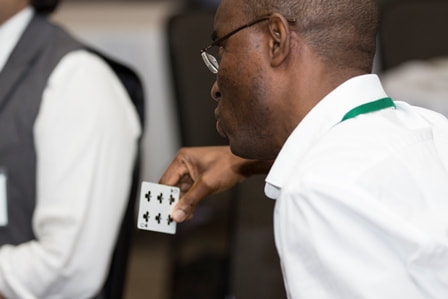
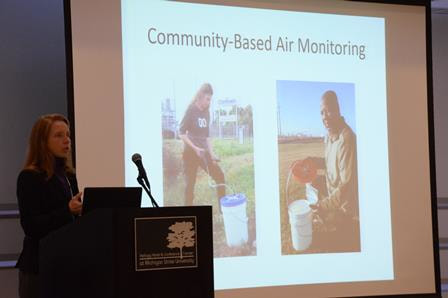
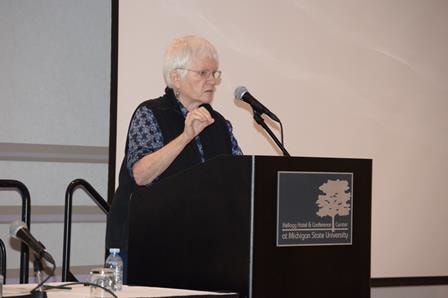
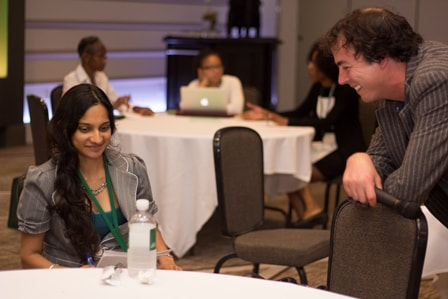
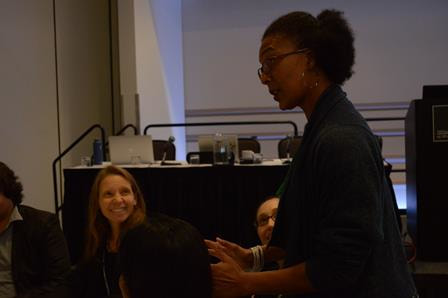
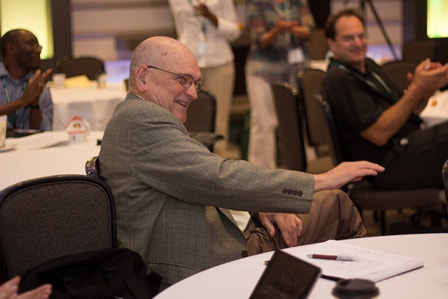
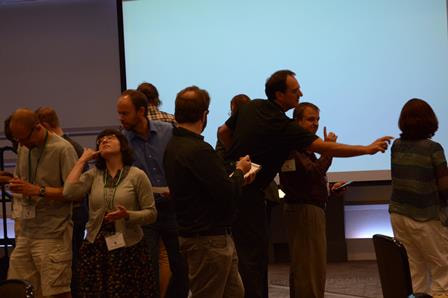
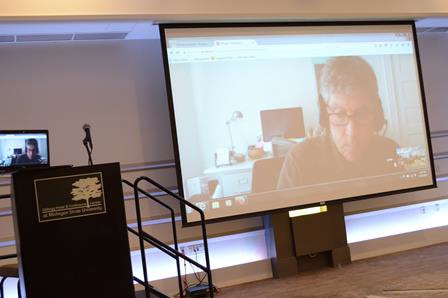
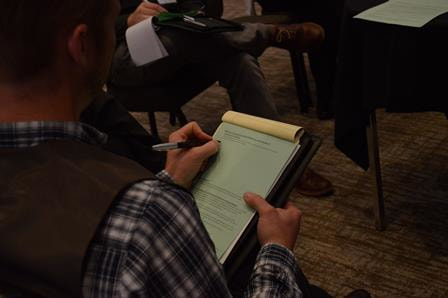
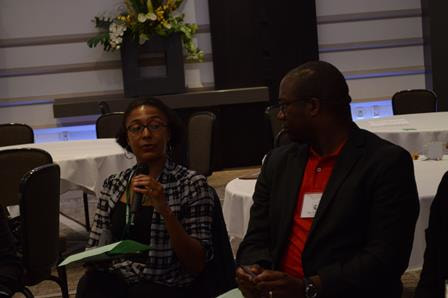
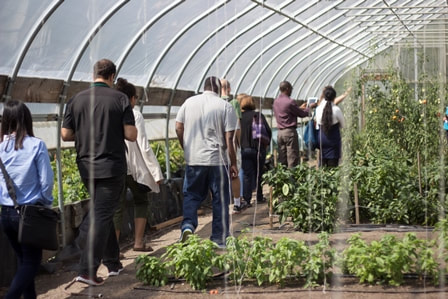
Logan D. A. Williams chaired a conference at Michigan State University from August 18-19, 2015 Knowledge from the Margins: Social Justice and Sustainability.

This workshop was funded by various colleges at Michigan State University and through an NSF Workshop Grant No. 1457138. The project outcomes for this grant are available here: link to project outcomes for NSF 1457138.
|

2011 Knowledge from the Margins Triple Session at 4S in Cleveland, OH
|
Please see the pdf file for the 2011 Knowledge from the Margins panel at 4S. Logan D. A. Williams co-organized this triple session with Tolu Odumosu, Kevin Fodness, and Denver Tang.
|
Copyright 2018-2020 Logan D. A. Williams
